Our Commitment to a Greener Future

Choosing a circuit board manufacturer for a global program means comparing more than quoted prices. A board that looks straightforward on a drawing may behave differently after assembly, thermal cycling, or repeated use. Buyers should examine a supplier’s process range, material options, quality controls, engineering support, and realistic delivery windows. Details matter: layer count, finished copper thickness, via structure, impedance requirements, and panel size can affect cost and production yield. So can clear documentation. Small things count.
This guide introduces ten manufacturers serving international buyers and outlines what to verify before requesting a quote. Rather than treating a familiar name as an automatic winner, it considers how each supplier’s capabilities fit a project’s needs. Prototype work, steady production, and complex high-layer designs can call for different strengths. There is no universal best. Sometimes a responsive smaller team is a better fit; sometimes scale and regional capacity matter more.
For a fair comparison, look beyond marketing claims. Ask about design-for-manufacturing feedback, inspection records, traceability, sample approval, and how design changes are handled. Confirm that certifications apply to the relevant factory and product scope. Request clear information about lead times, minimum order quantities, packaging, and communication across time zones. These checks cannot guarantee a smooth project, but they may reveal gaps early.
The manufacturers featured here differ in location, specialization, and production model. Use the list as a starting point, then validate current capabilities with your specifications and direct discussions. A website cannot show every limitation. Neither can one quotation. Careful comparison gives global buyers a more dependable way to shortlist partners for their next circuit board project.
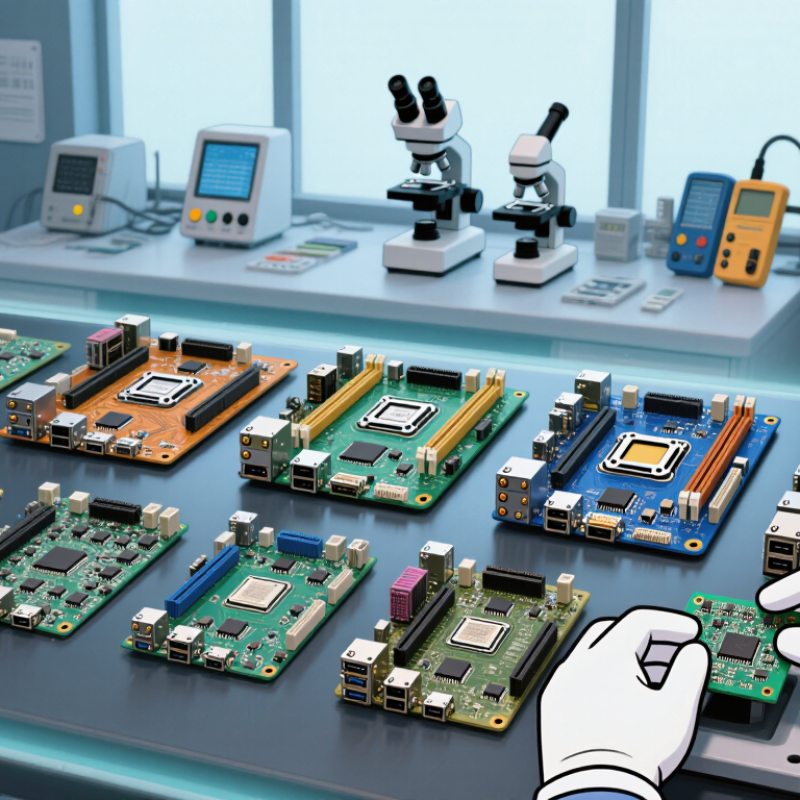
Circuit board manufacturing connects product design with the wider supply chain. A board may begin as a digital layout, but production depends on copper foil, laminate, solder mask, components, and skilled labor. These inputs can come from different regions, each with its own shipping schedules. A delay in one material can shift the entire build. Small parts matter.
For global buyers, supplier selection is therefore more than a price comparison. It involves checking production capacity, process controls, communication practices, and the ability to provide consistent records. Buyers should clarify board specifications early, including layer count, thickness, surface finish, and testing needs. Clear documents reduce avoidable revisions. They do not prevent every mistake.
Lead times also include more than factory work. Samples, engineering reviews, component availability, customs handling, and final inspection all affect delivery dates. Keeping practical inventory buffers can help, though excess stock ties up cash and may become outdated. That trade-off is easy to underestimate. Supply chains are rarely as tidy as a spreadsheet suggests. Regular status updates and realistic forecasts give teams time to respond when materials arrive late or a design needs adjustment.
Regional manufacturing overview of established PCB-producing markets. This is not a company ranking; capabilities vary by supplier, facility, and product qualification.
| Manufacturing Region | Common Production Strengths | Supply-Chain Role | Buyer Considerations |
|---|---|---|---|
| Mainland China | Broad production base spanning prototypes, high-volume rigid boards, multilayer boards, flexible circuits, and HDI products. | Large-scale source for domestic and international electronics supply chains, supported by extensive component and assembly ecosystems. | Compare lead time, export route, tooling ownership, quality controls, and the supplier’s experience with the required stack-up and certifications. |
| Taiwan | Strong presence in advanced multilayer, HDI, IC-substrate, and high-volume board production. | Important supplier base for computing, communications, and semiconductor-related electronics. | Confirm capacity allocation, technology roadmap, qualification requirements, and continuity plans for high-demand products. |
| Japan | Known for precision manufacturing, high-reliability boards, advanced materials, and specialized electronic substrates. | Supports automotive, industrial, consumer-electronics, and semiconductor supply chains. | Assess material availability, engineering-change procedures, documentation, and suitability for long-life or high-reliability programs. |
| South Korea | Significant capabilities in high-density boards, flexible circuits, and substrate-related products. | Closely connected to memory, display, mobile-device, and other advanced electronics ecosystems. | Check whether the facility supports the required board type, production volume, traceability, and customer-specific qualification process. |
| United States | Includes quick-turn prototypes, engineering-focused production, and boards for defense, aerospace, medical, and industrial applications. | Provides domestic sourcing options for buyers prioritizing local engineering support, controlled supply chains, or specific compliance needs. | Verify applicable certifications and regulatory requirements directly; domestic production does not automatically establish compliance or origin status. |
| Germany | Serves demanding industrial, automotive, medical, and high-reliability applications, including technically complex board designs. | Part of Europe’s electronics manufacturing network, with access to regional engineering and automotive supply chains. | Review product qualification, quality-system scope, component and laminate sourcing, and delivery arrangements within the European market. |
| Austria | PCB production includes multilayer and specialized boards for industrial and other technically demanding applications. | Contributes to the Central European electronics supply base and serves customers across nearby European markets. | Confirm available panel sizes, layer-count capability, minimum order quantities, and the supplier’s experience with the target application. |
| Italy | Manufacturing includes rigid, multilayer, and specialized boards serving industrial and professional electronics. | Supports European customers seeking regional sourcing and shorter communication or logistics links. | Compare production capacity and lead times, and establish how design changes, testing, and nonconformance handling are managed. |
| India | A developing production base serving domestic electronics demand and a range of rigid-board applications. | Provides an additional sourcing option as buyers diversify manufacturing locations and build regional supply networks. | Evaluate the specific plant’s process capability, qualified material range, export experience, and ability to meet repeat-order volumes. |
| Thailand | PCB manufacturing supports electronics and automotive-related production, including suppliers integrated into regional manufacturing networks. | Acts as a Southeast Asian production location connected to regional electronics assembly and export supply chains. | Assess logistics routes, production ramp capacity, local supplier dependencies, and contingency plans for materials and cross-border shipping. |