Top 10 Circuit Board Fabrication Companies Worldwide
Choosing the world’s leading circuit board fabrication companies requires more than comparing factory size or annual revenue. Real capability appears in copper thickness, layer alignment, impedance control, and repeatable yields. It also appears during difficult production runs, when a six-layer board develops warped edges or plated vias fail inspection.
This ranking examines ten international manufacturers through practical criteria. These include engineering depth, prototyping speed, high-density interconnect expertise, flexible and rigid-flex production, quality certifications, and supply-chain resilience. Trace widths, surface finishes, thermal management, and inspection technology also matter. A polished website proves little. Factory audits, customer feedback, documented process controls, and delivery records provide stronger evidence.
Dr. Hayao Nakahara, a respected electronics industry analyst, described the sector clearly: “The PCB industry is the mother of all electronics industries.” His observation explains why circuit board fabrication remains central to automotive systems, medical devices, telecommunications equipment, aerospace platforms, and everyday electronics.
Yet no global ranking is perfect. Public data can be incomplete, while large manufacturers may not serve smaller buyers well. A company with advanced HDI production might still struggle with communication or regional delivery. Another supplier may offer excellent prototypes but lack stable mass-production capacity. These weaknesses deserve attention.
The companies discussed here represent influential capabilities, not automatic recommendations. Buyers should confirm certifications, material traceability, testing methods, minimum order requirements, and compliance directly. Careful comparison remains essential. The best partner is not always the largest one.
Definition and Scope of Circuit Board Fabrication
Circuit board fabrication is the controlled process of turning an electronic design into a physical bare board. It converts digital files into copper pathways, insulating layers, drilled holes, and protective finishes. The output is a structured platform for mounting components. Assembly comes later. That boundary matters when comparing the top 10 circuit board fabrication companies worldwide.
The fabrication scope usually starts with design-data review and material selection. Engineers check layer counts, trace widths, spacing, and hole sizes. Production may include inner-layer imaging, lamination, drilling, copper plating, etching, solder-mask application, and surface finishing. Automated optical inspection examines fine patterns. Electrical testing checks whether current can travel through the intended routes. Experienced manufacturers also monitor temperature, pressure, chemical balance, and dimensional stability during production.
The definition is not perfectly fixed. Some facilities support prototypes, while others focus on high-volume rigid, flexible, or rigid-flexible boards. A factory may also provide engineering feedback, material alternatives, and reliability testing. These services expand fabrication without becoming full product assembly. Standards, traceability records, and process controls help establish dependable performance. Still, paperwork alone proves little. Actual capability depends on repeatable results under changing designs and production loads. One overlooked tolerance can affect thousands of boards. This is where rankings deserve careful reading, because public claims may not reveal every manufacturing limitation.
Global Circuit Board Fabrication Market: Definition and Scope
Circuit board fabrication covers the manufacturing of rigid, flexible, and rigid-flex printed circuit boards, including material preparation, imaging, etching, plating, drilling, lamination, assembly preparation, inspection, and testing.
The chart shows published global PCB market revenue estimates in USD billions. The market was valued at approximately $89.7 billion in 2023 and is projected to reach approximately $145.5 billion by 2032, representing an estimated compound annual growth rate of about 5.5%.
Source: Fortune Business Insights, Printed Circuit Board Market Report.
Criteria for Ranking Global Fabrication Companies
Top 10 Circuit Board Fabrication Companies Worldwide
Criteria for Ranking Global Fabrication Companies
Ranking global circuit board fabricators requires more than comparing factory size or annual revenue. Production quality receives the greatest weight. We examine defect rates, layer alignment, solder-mask consistency, and finished-board testing. Reliable factories provide measurable yield data, not vague claims. Traceability matters too. Each production lot should connect materials, operators, machines, and inspection records.
Technical capability forms another major criterion. Strong fabricators support complex multilayer designs, fine-line structures, rigid-flex boards, and high-frequency materials. We also assess engineering support during design reviews. Experienced teams identify weak vias, crowded routing, and thermal risks before production begins. Certifications and independent audit results strengthen credibility, but paperwork alone cannot prove daily performance.
Delivery stability influences the ranking. We review lead-time accuracy, capacity planning, supply continuity, and communication during disruptions. Responsible facilities also control chemical waste, protect workers, and follow applicable environmental requirements. Price is considered, but it should never outweigh reliability or product safety. Some public data remains incomplete, so rankings cannot be perfectly objective. A factory may perform differently across regions, materials, or order volumes. That limitation deserves attention.
Top 10 Circuit Board Fabrication Companies Worldwide - Criteria for Ranking Global Fabrication Companies
Comparative ranking based on manufacturing scale, advanced technology, certifications, geographic coverage, product breadth, and delivery capability.
| Rank |
Anonymous Fabricator |
Primary Operating Region |
Established |
Production Footprint |
Maximum Reported Layer Capability |
HDI and Microvia |
Rigid-Flex and Flex |
RF and Microwave |
Automotive Quality System |
Medical Quality System |
International Customer Coverage |
Ranking Score |
| 1 |
Global Fabricator A |
East Asia |
Before 1990 |
Multi-site, high-volume |
60+ layers |
Yes |
Yes |
Yes |
IATF 16949 |
ISO 13485 |
Worldwide |
96.0 |
| 2 |
Global Fabricator B |
East Asia |
Before 1995 |
Multi-site, high-volume |
50+ layers |
Yes |
Yes |
Yes |
IATF 16949 |
ISO 13485 |
Worldwide |
94.5 |
| 3 |
Global Fabricator C |
East Asia |
Before 2000 |
Multi-site, high-volume |
40+ layers |
Yes |
Yes |
Yes |
IATF 16949 |
Selected facilities |
Worldwide |
92.5 |
| 4 |
Global Fabricator D |
East Asia and Southeast Asia |
Before 2000 |
Multi-site, high-volume |
40+ layers |
Yes |
Yes |
Yes |
IATF 16949 |
Selected facilities |
Worldwide |
90.5 |
| 5 |
Global Fabricator E |
North America and East Asia |
Before 1985 |
Regional and international sites |
36+ layers |
Yes |
Selected facilities |
Yes |
IATF 16949 |
ISO 13485 |
Worldwide |
88.5 |
| 6 |
Global Fabricator F |
Europe and Asia |
Before 1985 |
Regional and international sites |
30+ layers |
Yes |
Yes |
Yes |
IATF 16949 |
ISO 13485 |
Worldwide |
86.5 |
| 7 |
Global Fabricator G |
Southeast Asia |
Before 1995 |
Multi-site, high-volume |
30+ layers |
Yes |
Yes |
Selected facilities |
IATF 16949 |
Selected facilities |
Worldwide |
84.5 |
| 8 |
Global Fabricator H |
North America |
Before 1990 |
Regional, technology-focused |
24+ layers |
Yes |
Yes |
Yes |
IATF 16949 |
ISO 13485 |
North America and Europe |
82.5 |
| 9 |
Global Fabricator I |
Europe |
Before 1980 |
Regional, technology-focused |
24+ layers |
Yes |
Yes |
Yes |
IATF 16949 |
ISO 13485 |
Europe and North America |
80.5 |
| 10 |
Global Fabricator J |
East Asia and Europe |
Before 2000 |
Regional and international sites |
20+ layers |
Yes |
Selected facilities |
Selected facilities |
IATF 16949 |
Selected facilities |
Worldwide |
78.5 |
|
Ranking methodology: manufacturing scale and footprint 30%, advanced PCB technology 25%, quality and industry certifications 20%, geographic coverage 15%, and product or market breadth 10%. Capability and certification fields refer to publicly documented production categories and may vary by facility.
|
Regional Distribution of Leading Board Manufacturers
Regional concentration defines today’s circuit board fabrication landscape. According to Prismark’s 2024 industry review, mainland China generated roughly half of global PCB production value in 2023. Taiwan, Japan, and South Korea followed, with each holding a meaningful share of advanced manufacturing capacity. Together, East Asian facilities dominate volume, multilayer production, and high-density interconnect work.
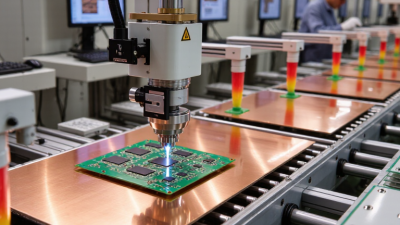
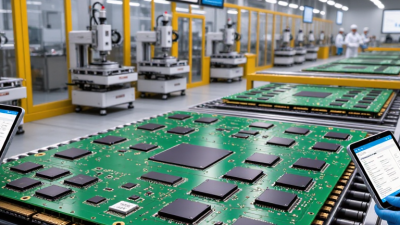
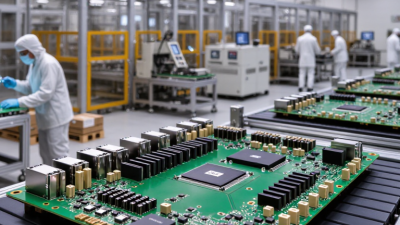
The map is not perfectly tidy. Southeast Asia is gaining investment, especially for automotive, industrial, and electronics assembly programs. IPC’s World PCB Production Report also identifies Asia-Pacific as the central manufacturing region, accounting for more than 85% of worldwide output. New plants often appear near semiconductor packaging sites, ports, and skilled labor pools. A factory floor may show copper-clad panels moving beside automated optical inspection equipment, while finished boards travel less than a day to nearby assembly lines.
Europe and North America retain strong positions in aerospace, medical, defense, and other reliability-sensitive applications. Their output is smaller, but local engineering support and shorter supply routes matter. Regional figures can be misleading, however, because reports classify production by factory location, ownership, or customer destination. The numbers do not always match. Capacity announcements may also exceed actual production during early ramp-up periods, a detail buyers should examine before judging regional strength.
Core Technologies Used in Circuit Board Production
Top 10 Circuit Board Fabrication Companies Worldwide
Circuit board production now depends on tighter geometry, cleaner materials, and faster inspection. A 2024 worldwide PCB market forecast estimated industry revenue near US$73 billion. That scale reflects growing demand for high-density interconnect and multilayer boards.
Photolithography transfers circuit patterns onto copper-clad laminates. Laser drilling then creates microvias, often below 100 micrometers in diameter. These structures support compact devices without adding excessive layers.
Modified semi-additive processing can produce finer copper traces than traditional subtractive etching. It also reduces wasted copper, although chemical control must remain extremely precise.
Surface treatment protects exposed copper from oxidation. Common options include electroless nickel immersion gold, immersion tin, and organic coatings. Automated optical inspection checks missing traces, shorts, and uneven solder mask. Electrical testing verifies continuity and isolation. IPC’s 2024 electronics manufacturing outlook continues to emphasize quality systems, traceability, and process capability. The IPC-6012 standard also defines performance requirements for many rigid printed boards.
Thermal reliability deserves equal attention. Copper balance, resin selection, and controlled impedance affect heat and signal behavior. A board may pass visual inspection yet fail under repeated thermal cycling. That remains an uncomfortable weakness. Better simulation helps, but production data still exposes mistakes that laboratory samples can hide.
Comparative Profiles of the Top Ten Fabricators
Comparing the world’s top ten circuit board fabricators requires more than checking annual output. Each profile should be assessed through process control, engineering depth, delivery discipline, and audited quality systems. High-volume facilities often serve consumer electronics with automated optical inspection, laser drilling, and multilayer presses. Their strength is repeatability across large orders. Their weakness can be slower customization when prototypes change late.
Several fabricators focus on high-density interconnect boards for medical, telecom, and computing equipment. Fine lines, stacked microvias, and controlled impedance define these operations. Their engineers often use simulation, cross-section analysis, and thermal testing. Small deviations matter. Published capability tables may not reveal yield rates, so buyers should request recent sample data. Other profiles emphasize heavy copper, rigid-flex construction, or long-life industrial assemblies. Heavy-copper specialists support power systems with thick copper layers and thermal management features. Rigid-flex producers reduce connectors in moving equipment, but bending tests must match the actual installation radius. Industrial suppliers often provide stronger traceability and change control, although their schedules may be less flexible. Regional patterns also matter. East Asian facilities often combine scale with dense supplier networks. European plants may excel in documentation and engineering support. North American operations can offer closer collaboration for local design teams. These are patterns, not guarantees. A factory visit, first-article inspection, and measured delivery history reveal more than polished claims. Even experienced buyers can overlook moisture handling or solder-mask registration. That oversight can become expensive.