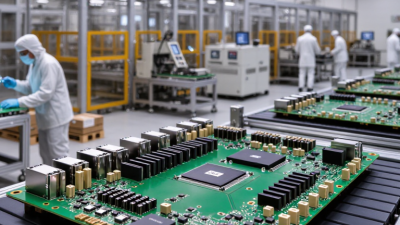
Choosing the right partner for pcb fabrication and assembly is rarely a simple price comparison. A strong manufacturer must convert clean Gerber files into reliable boards, repeatable assemblies, and traceable production records. The best facilities combine engineering support, controlled materials, automated inspection, and disciplined process management. They also understand the pressure behind every shipment: a misaligned connector, weak solder joint, or delayed prototype can stop an entire product launch.
John W. Mitchell, IPC president and CEO, has said, “IPC standards are the foundation of the electronics industry.” That principle guides this 2026 overview of leading PCB fabrication and assembly manufacturers. Their capabilities are examined across prototype speed, HDI production, rigid-flex technology, surface-mount assembly, testing, certification, and global fulfillment. Factory details matter. So do smaller signals, such as clean workstations, barcode tracking, calibrated AOI equipment, and engineers who explain a failed design without hiding behind jargon.
No ranking is perfect. A manufacturer praised for high-volume automotive work may struggle with low-volume medical prototypes. A fast supplier may offer less flexible engineering support. These differences deserve attention. This guide therefore avoids treating one factory as universally superior. It focuses on practical fit, documented quality, transparent communication, and evidence from real manufacturing experience. Readers should still verify current certifications, lead times, component sourcing policies, and regional compliance before signing a purchase order. The shortlist is useful, but careful judgment remains necessary.

PCB manufacturing in 2026 is moving beyond simple layer counts. HDI boards now support compact processors, cameras, and high-speed memory in smaller devices. Microvias shorten signal paths, but their reliability depends on precise drilling, copper filling, and controlled lamination.
Flex and rigid-flex designs are expanding in medical instruments, vehicles, and wearable equipment. Their bend zones need careful material selection and realistic movement testing. A board may survive electrical inspection yet fail after repeated folding. That gap still troubles many engineering teams. It shows why laboratory results cannot replace production experience.
Advanced packaging is changing the relationship between chips and substrates. Fine-pitch interconnects, embedded components, and high-density package substrates demand tighter registration control. Manufacturing teams must monitor thermal expansion, warpage, impedance, and contamination at every critical stage. Small process variations can affect yield quickly. Digital inspection helps, but it does not solve poor design decisions.
The strongest manufacturers combine engineering review with disciplined process data. They question trace width, stackup symmetry, material availability, and repair limits before fabrication begins. Still, no process is perfect. Some projects overuse HDI features without proving their value. A simpler rigid-flex structure may sometimes deliver better reliability, lower risk, and easier field service.

For 2026 PCB sourcing, certification claims need practical verification. IPC-6012 Class 3 requires stronger reliability controls than ordinary commercial boards. It covers demanding applications, including aerospace, defense, medical, and industrial electronics. Ask for the exact revision, qualification records, and acceptance criteria. A certificate alone is not enough.
The ISO Survey 2023 reported 1,265,216 valid ISO 9001 certificates worldwide. That number shows broad adoption, not equal process maturity. Review corrective-action records, calibration logs, and change-control procedures. IATF 16949 adds automotive discipline, including risk analysis, traceability, layered audits, and supplier development. Request a sample traveler showing lot numbers, solder profile data, copper thickness, and final inspection results. IPC’s 2024 electronics technology roadmap also highlights rising demands for reliability, miniaturization, and manufacturing consistency. These pressures make process evidence more valuable than polished brochures.
Tips: Visit the factory if possible. Watch how operators handle moisture-sensitive components. Check whether rejected boards are physically segregated. Ask how quickly production can repeat a failed test. A useful supplier should answer without hesitation. Still, selection teams can overvalue certificates. I have seen strong documents hide weak communication and unstable lead times. Build a small pilot order, inspect cross-sections, and compare defect data before approving volume production. Some criteria will remain imperfect, especially when designs change late. That uncertainty deserves a written control plan.
This comparison shows the primary scope of each standard used in supplier evaluation. IPC-6012 Class 3 addresses stringent printed board performance and reliability requirements, ISO 9001:2015 addresses quality management system controls across industries, and IATF 16949:2016 adds automotive-specific quality requirements to an ISO 9001-based system. A value of 1 indicates that the topic is explicitly within the standard’s scope; it is not a certification score.
Reference framework: IPC-6012, ISO 9001:2015, and IATF 16949:2016.
PCB fabricators should be compared through measurable production data, not attractive catalogs. Layer count reveals process depth. Two- and four-layer boards suit controls, sensors, and basic power circuits. Six to twelve layers support dense computing and communication designs. High-layer boards demand tighter registration, reliable lamination, and controlled impedance.
Line width and spacing expose practical capability. A supplier claiming 3/3 mil geometry should provide test coupons, cross-section images, and yield records. Small traces can fail during etching or plating. They need stable imaging rooms, clean chemistry, and frequent inspection. Barely acceptable is not reliable.
Annual capacity also needs careful reading. Some factories report total panel area, while others report finished boards. Ask for monthly capacity by technology, layer range, and material type. A plant may advertise 500,000 square meters annually but struggle with high-mix prototypes. That difference matters. Production reviews often uncover bottlenecks around drilling, lamination, or final testing. Published figures can mislead.
Assembly capability adds another layer of evaluation. Check placement accuracy, component traceability, solder paste control, and inspection coverage. A capable partner links fabrication data with assembly feedback. Even experienced teams miss this connection sometimes. Clear records, repeatable measurements, and honest limits are stronger evidence than oversized capacity claims.
In 2026, leading PCB assembly providers will compete on measured SMT accuracy, DPMO, and PCBA throughput. IPC’s 2024 Electronics Industry Survey identifies skills shortages and delivery pressure as persistent industry concerns. These pressures make process evidence more valuable than impressive equipment lists. Ask for placement accuracy in micrometers, feeder verification records, and first-pass yield by product family. A claimed “high-speed line” means little without board complexity, component mix, and changeover time.
DPMO requires careful interpretation. IPC-9261A defines it as defects per million opportunities, not simply defects per million boards. For example, two defects on a board with 10,000 solder opportunities equal 200 DPMO. That figure is more informative than a vague quality percentage. IPC-A-610J also separates acceptance requirements by product class, so comparisons must use the same class and inspection method. Automated optical inspection, X-ray sampling, and repair logs should connect to one traceable production record.
Small details expose weak control. A 25-micrometer placement claim may hide nozzle wear or thermal drift. Throughput can fall sharply after a feeder change. It happens. Providers should report UPH beside line utilization, downtime, and first-pass yield. A lower DPMO is not automatically better if inspection coverage is incomplete. Buyers should request three months of anonymized production data, including escapes, rework hours, and corrective-action closure. Candor is part of manufacturing quality.
In 2026, comparing PCB fabrication and assembly manufacturers requires more than checking a capacity chart. In supplier audits, I examine certification scope, renewal dates, and the actual production site. ISO 9001 supports process control, while IATF 16949 or AS9100 may matter for automotive or aerospace programs. IPC workmanship standards also deserve review, but they are not substitutes for a complete quality system. Ask for traceability records, first-article reports, and corrective-action examples.
Lead time should be measured from approved data, not from the first quotation. Lead time matters. A prototype may require seven to ten working days, while production depends on material availability, layer count, and testing requirements. Technology comparisons should include fine-line capability, controlled impedance, HDI microvias, surface finishes, AOI, and X-ray inspection. Request sample data for a dense board, not only a simple two-layer panel. Scale can mislead. Large facilities may offer strong purchasing power, yet smaller plants can provide faster engineering feedback and closer oversight.
I also compare monthly output with actual utilization, staffing, backup equipment, and assembly flexibility. A manufacturer claiming high volume should explain how it handles urgent engineering changes without disrupting scheduled orders. My own evaluations are not perfect; quoted lead times sometimes change after design review. That uncertainty should be recorded, discussed, and reduced through clear files, approval gates, and realistic forecasts.